ROLE:
DIGITAL PRODUCT DESIGNER
COMPANY:
PLANET SMART CITY
PROJECT LENGTH:
3 MONTHS
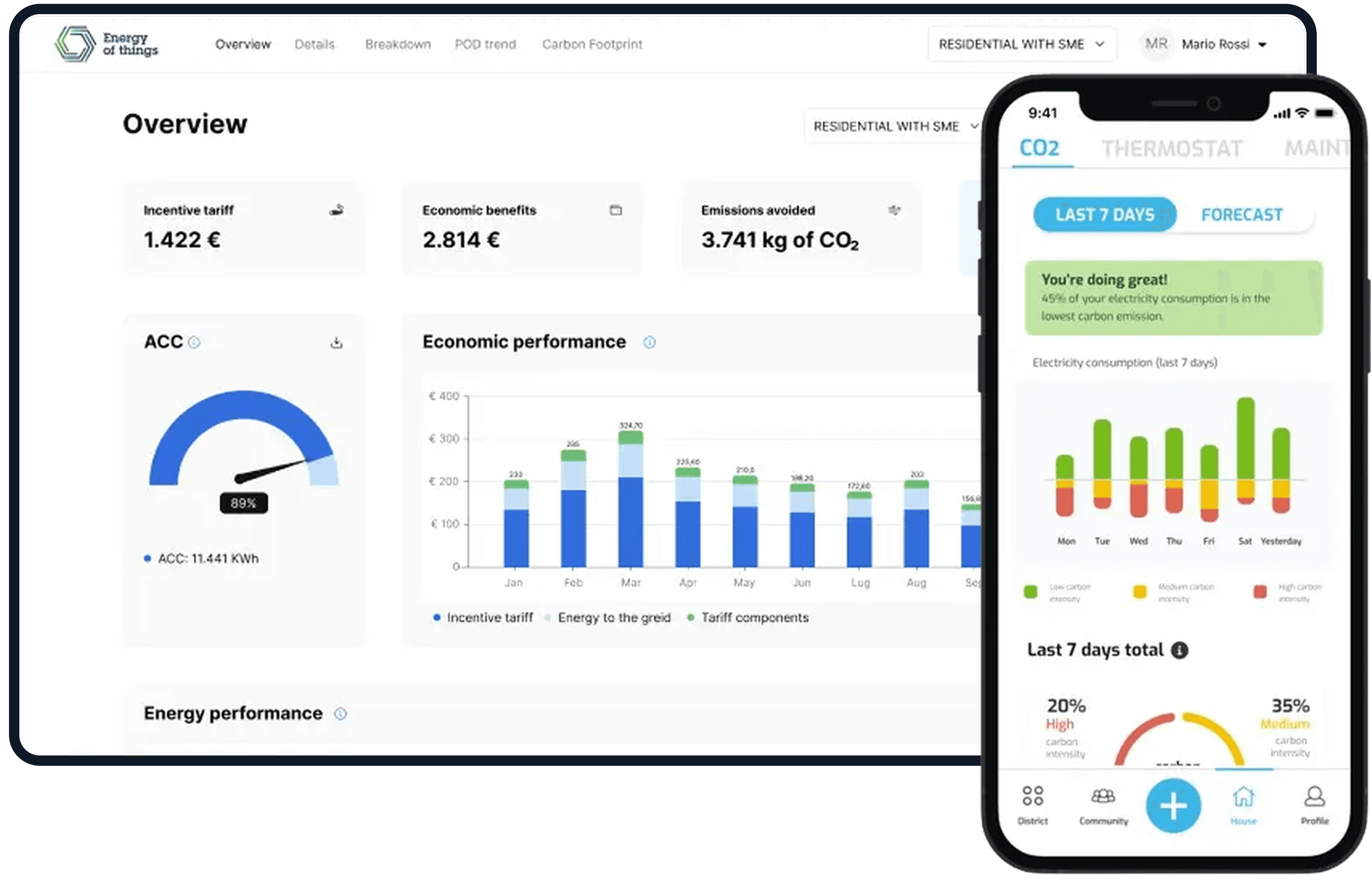
I worked on the UX/UI design of the mobile experience of the Energy Management platform, contributing to user flows and interaction design for residents, while collaborating with the team working on the web dashboard.
My contribution included shaping how complex energy data is presented and explored by different user profiles, from residents to facility managers, in collaboration with engineers and domain experts.
Designing for data-heavy products requires prioritization more than simplification
Making information usable often means deciding what not to show.
Clarity and hierarchy are more impactful than visual richness
In complex dashboards, structure guides understanding more than decoration.Sustainability becomes actionable only when made tangible through interfaces
Turning abstract environmental data into meaningful insights is a core UX challenge.
Planet Smart City partnered with EOT – Energy of Things to develop a cloud-based Energy Management platform aimed at helping smart neighbourhoods monitor, analyze and optimize energy consumption.
The platform supports different user profiles, from residents to condominium administrators and facility managers, combining real-time data, predictive analytics and sustainability insights into a single system.
My role focused on designing how these complex data streams could be translated into usable and meaningful experiences across web and mobile.
The project involved designing for a multi-stakeholder ecosystem, where users with very different needs had to interact with the same data infrastructure.
Supporting real-time monitoring while keeping interfaces readable
Enabling both high-level overviews and detailed breakdowns
Balancing economic insights with environmental impact indicators
Making energy data understandable also for non-technical users
This required a careful balance between analytical depth and everyday usability.
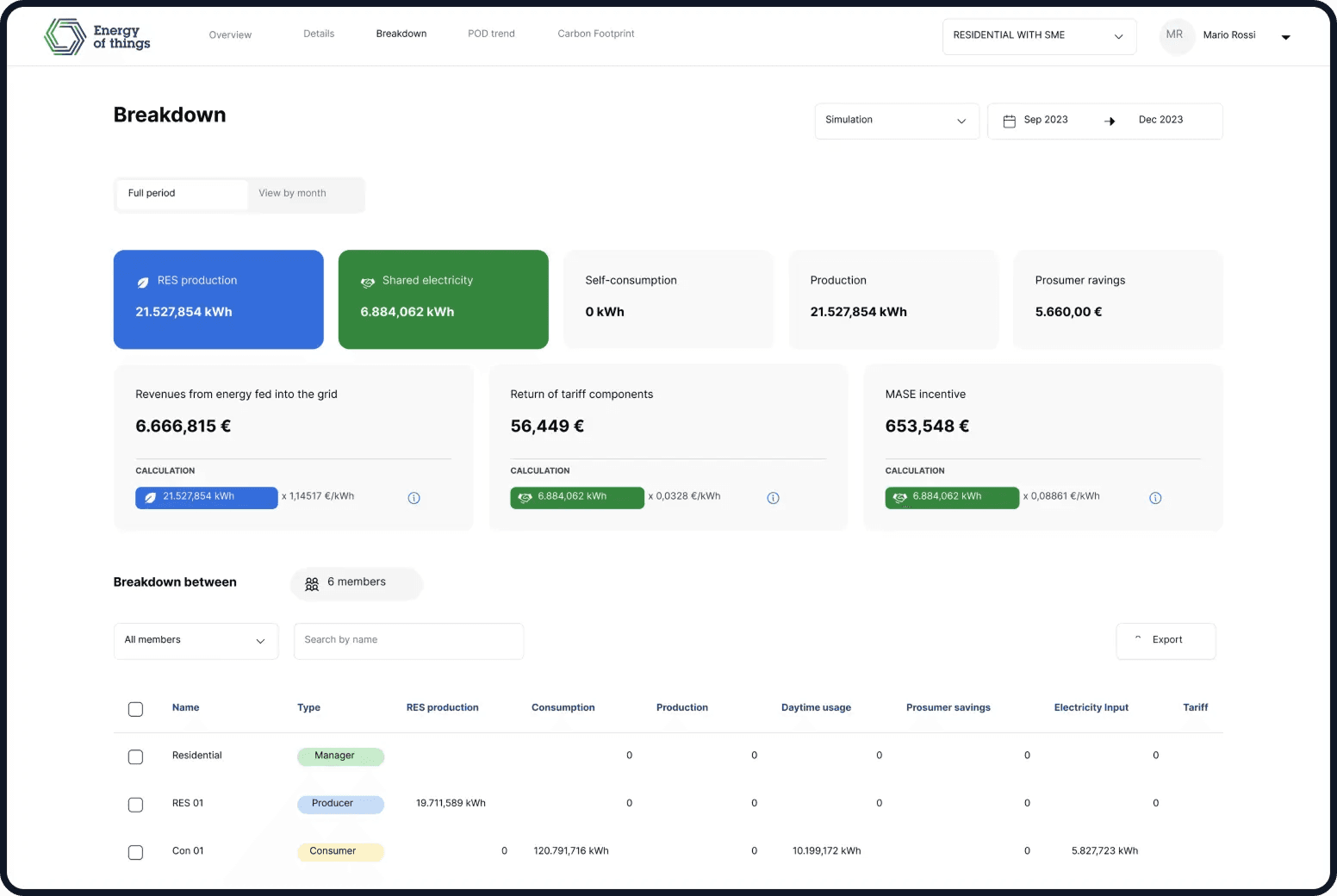
A core focus of the project was defining how energy data could be structured, visualized and navigated across different levels of granularity.
Rather than displaying raw metrics, the goal was to guide users through progressive layers of information: from high-level summaries to detailed consumption patterns and carbon footprint analysis.
Grouping related KPIs into meaningful clusters
Highlighting trends and anomalies instead of isolated values
Supporting comparisons across time, buildings and user groups
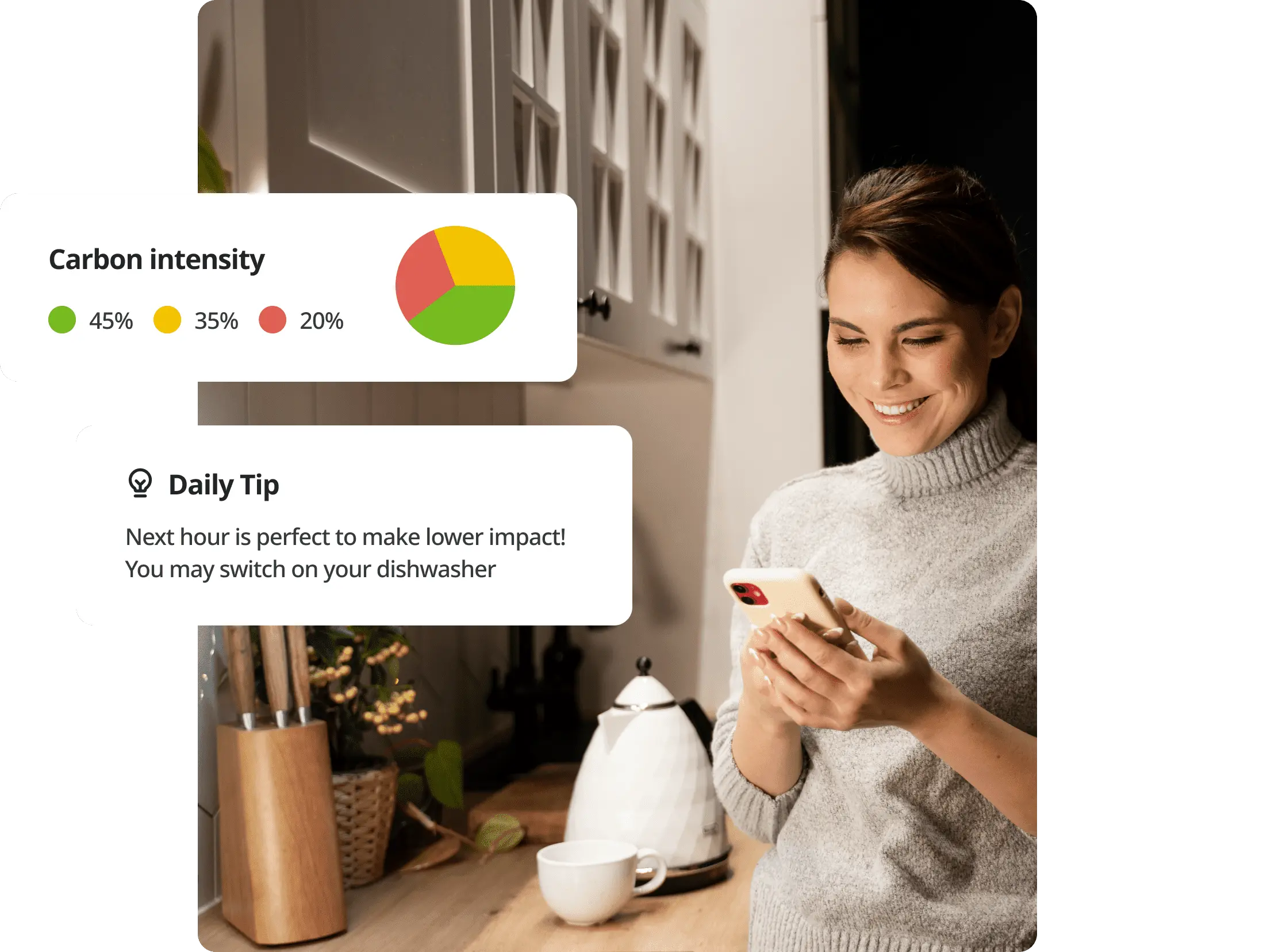
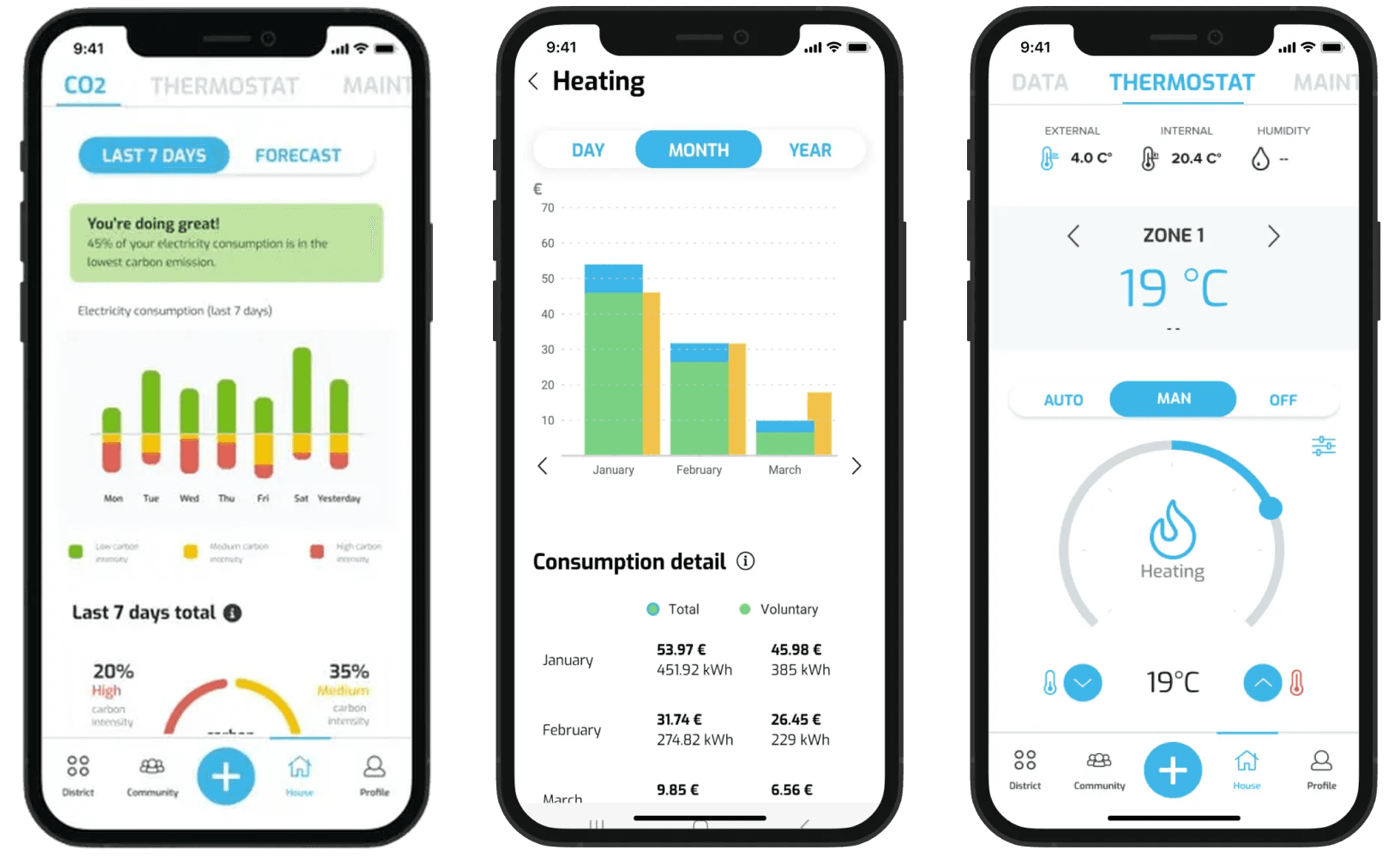
To support usability across such a complex system, a few core principles guided the design:
Progressive disclosure to avoid cognitive overload
Consistent interaction patterns between web and mobile
Visual hierarchy to prioritize what requires attention
Actionable insights over passive reporting
Accessibility and readability for non-expert users
These principles ensured that the platform remained approachable despite its technical nature.
The platform is currently used in more than 80 residential districts worldwide, enabling proactive energy management and average consumption reductions of up to 15% within the first year.
Administrators gain access to real-time alerts and exportable ESG KPIs, while residents can better understand their impact and adopt more sustainable behaviours.